Working towards gender equality and social justice
- Sinamangal Kathmandu, Nepal 44600
- didibahini01@gmail.com
- +977 985-1049100
24/7 Helpline
+977 985-1049100
didibahini01@gmail.com
Address
Sinamangal Kathmandu, Nepal 44600
Didi Bahini’s Development Learning Resource Center (DLRC)
DLRC
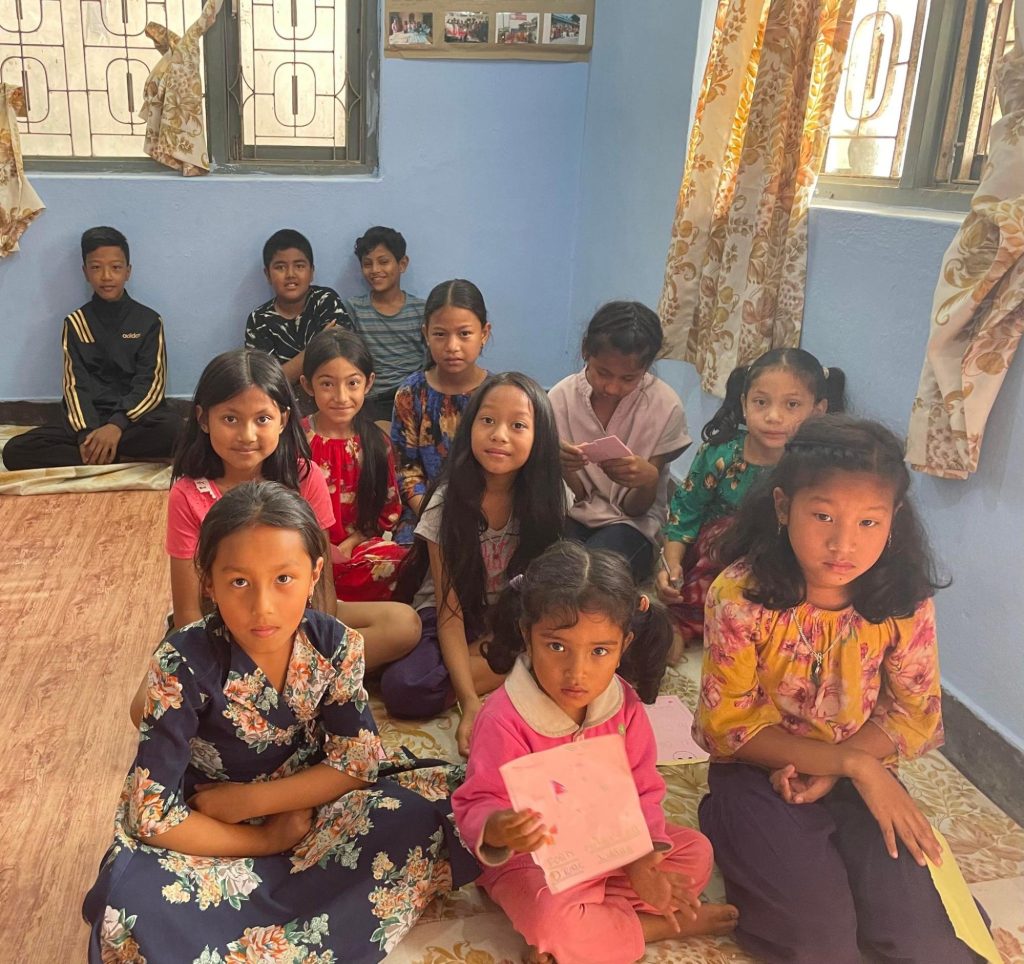
Lubhoo DLRC By Saru Duckworth, Fulbright Scholar
For over 10 years, Didi Bahini has partnered with local government and community members to support the Lubhu Development Learning Resource Center (DLRC) in Mahalaxmi Municipality, Bagmati Province. Adapted from Didi Bahini’s pioneering women’s political empowerment and education programs conducted across Nepal since 1992, the center has quickly grown into a beacon of women-led mutual support and aid to the community.
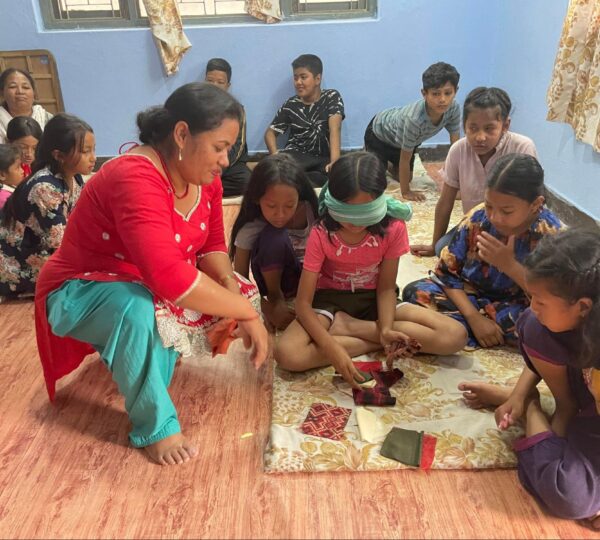
The Lubhu DLRC is open six days a week and offers a variety of free programs and services to the community. At the heart of it’s work are it’s educational programs, working to engage youth to transform social norms and break cycles of poverty and marginalization. Local children come daily after school for three hours of additional educational instruction and developmental support, including homework help, arts and crafts, storybook reading, and math practice. “We are supporting children to complete their homework, which was not happening before our program as most of their parents are uneducated. Now, their school performance is improving,” reports DLRC President Ms. Devi Shrestha. Providing children a safe, educational after school environment also helps relieve the burden of childcare on working mothers who might otherwise not be able to earn a living while caring for their children.
In addition, the DLRC regularly holds trainings to educate local women and girls on their basic rights, including property rights, reproductive rights, rights against child marriage, domestic violence, dignified menstruation, and more. Youth, including boys, are engaged in these sessions to harness their potential as cultural multipliers and build bridges to older generations.
Leveraging close knowledge of and partnerships with local and national government, program staff also support women to apply for and secure critical legal documents, such as birth and death certificates, property licenses, and other legal registrations.These processes are often inherently complex and opaque, particularly for women with low educational backgrounds or without supportive male family members. Other DLRC offerings include skills and agricultural enterprise training to promote women’s economic independence and resilience.
The leadership of the local Women’s
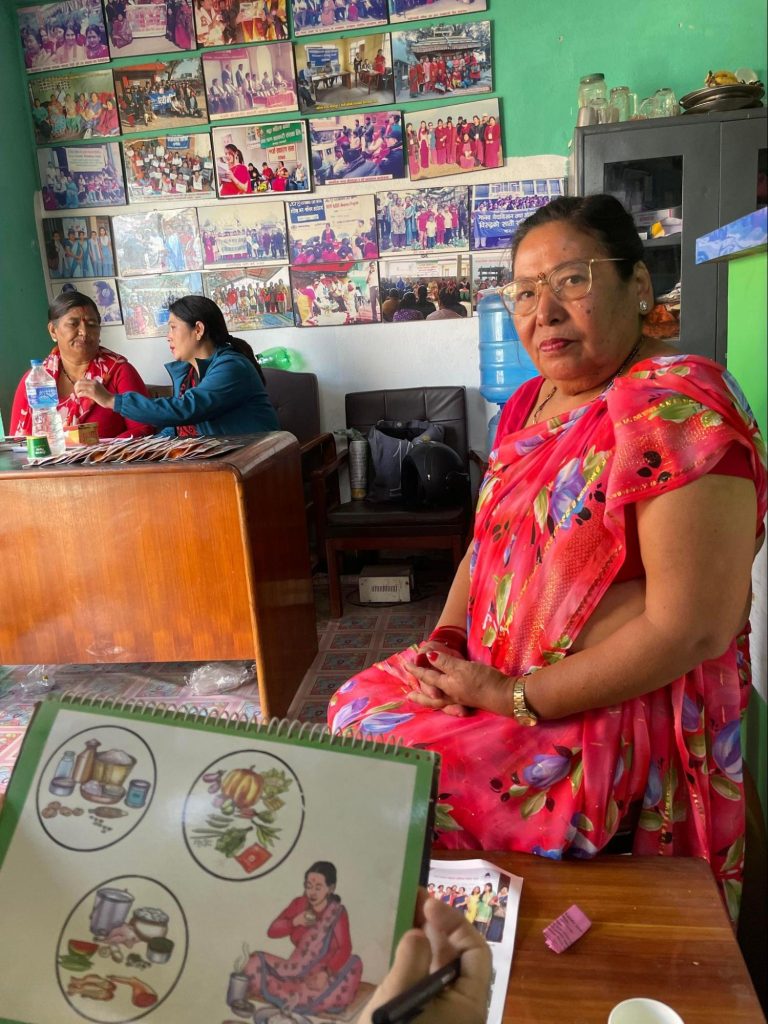
The leadership of the local Women’s Forum is at the heart of the DLRC’s success. The Forum currently comprises 15 female members who each hold important leadership positions in the community as mothers, teachers, frontline health workers, and elected local government representatives. Each month the group meets to plan programming and pool joint savings, about 100 rupees per member, which helps support the DLRC’s ongoing work.
Complementing her role as President of the Lubhu DLRC and Women’s Forum, Ms.Shrestha also serves as head of the local women’s savings cooperative, Kalyankari Savings and Credit Co-operative, which claims to be one of the largest female-led savings associations in South Asia. Her multiple roles help ensure synergy and efficiency in community resource planning and programming. Many years before joining Didi Bahini, she was a housewife with a low level of education, and was unable to read or write. After attending a Didi Bahini-led political empowerment training at her local government office, she was inspired to leverage her newfound knowledge and awareness to become a leader advocating for marginalized women and girls. She began by successfully petitioning local government to uphold policies protecting women and children’s basic rights, including those allowing citizenship to be passed from single mothers to children instead of only fathers, and government allowances for single women. Her efforts snowballed, at first gaining attention and support from friends and neighbors, and eventually recognition from local government representatives and respected community leaders. Out of this grassroots activism, her formal partnership with Didi Bahini was born and the Women’s Forum and its related bodies were established.
Many disasters have affected Nepal in recent years, during which time the Center has been a vital source of services and support for the community. During the 2015 earthquake that devestated the Kathmandu Valley, many local families were displaced from their homes and forced to stay in tents and other informal housing with no access to cook food. Women leaders from the Women’s Forum and DLRC worked with local government to cook and serve meals to over 40 families daily, provide building materials for temporary shelters, and distribute other essential supplies such as sanitary pads. Didi Bahini also provided seed money and skills training in shoemaking and other artisan crafts for local women to start their own income-generation enterprises during the crisis, many earning income for the first time in their lives. Several women who participated in these trainings went on to train other local women in their new skills, creating spillover impact and buidling economic resilience.
The COVID-19 pandemic of 2020-2021 again affected the work of the DLRC. During the pandemic and nearly three month lockdown in Nepal in 2020, almost all local families faced severe financial difficulties and unemployment. Women’s basic rights and resilience were again threatened by increased domestic violence at home, increased care burdens, and decreased financial independence and mobility. To ensure positive trends were not reversed completely, Didi Bahini and the DLRC connected families to services provided by the government, NGOs, and job placement organizations, and provided digital skills training to enable self-employment even during lockdown. They also implemented the FAITH (Food Available in the Home) Project for the first time, supporting women with materials and training to open agricultural businesses on unused farm land identified by the government as beneficial for ecological purposes. As the community gradually recovers, the DLRC is training women and their families in financial literacy and savings to help them become more resilient for future crises.
Goldhunga DLRS By Saru Duckworth, Fulbright Scholar
Didi Bahini’s Development Learning Resource Center (DLRC) model is a leading example of self-sustaining, women-led programs that provide vital community resources. For over 20 years, Didi Bahini has worked with the local government and community to support the Goldhunga local Women’s Forum and its programs including the DLRC in Tarakeshwar Municipality, Bagmati Province.
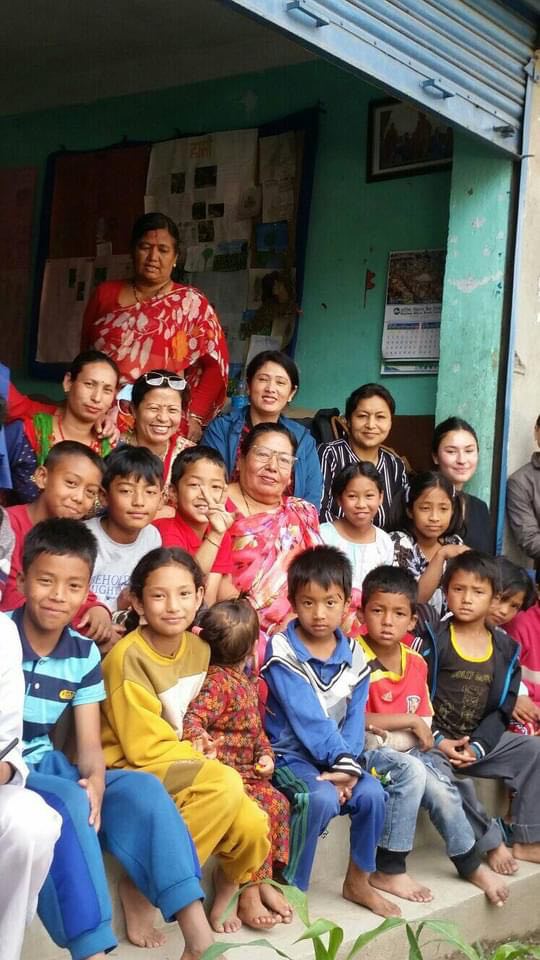
The Goldhunga DLRC is open six days a week and offers a variety of programs to the community. On average, 25-30 local children come daily after school for three hours of free educational instruction and developmental support, including homework help, arts and crafts, storybook reading, and dancing and singing instruction.
These programs are working to help decrease the prevalence in drug addiction among local youth by engaging them and raising awareness. Providing children a safe, educational after school environment also helps relieve the burden of childcare on working mothers who might otherwise not be able to earn a living and take care of their children. “Children who participate in DLRC programs did not have good manners and struggled to pay attention when they started coming. Now, there is a big improvement in their behavior, they are learning manners, and their homework is completed”, says DLRC President Ms. Kanti Bajracharya.
The Goldhunga DLRC has been successful thanks to a strong partnership with the local government and community. It has partnered government services since its founding days, when the primary awareness-raising strategy was advertising its after school educational programs in government schools. The center has done a good job of working closely with political parties and officials while still remaining a trusted apolitical community resource.
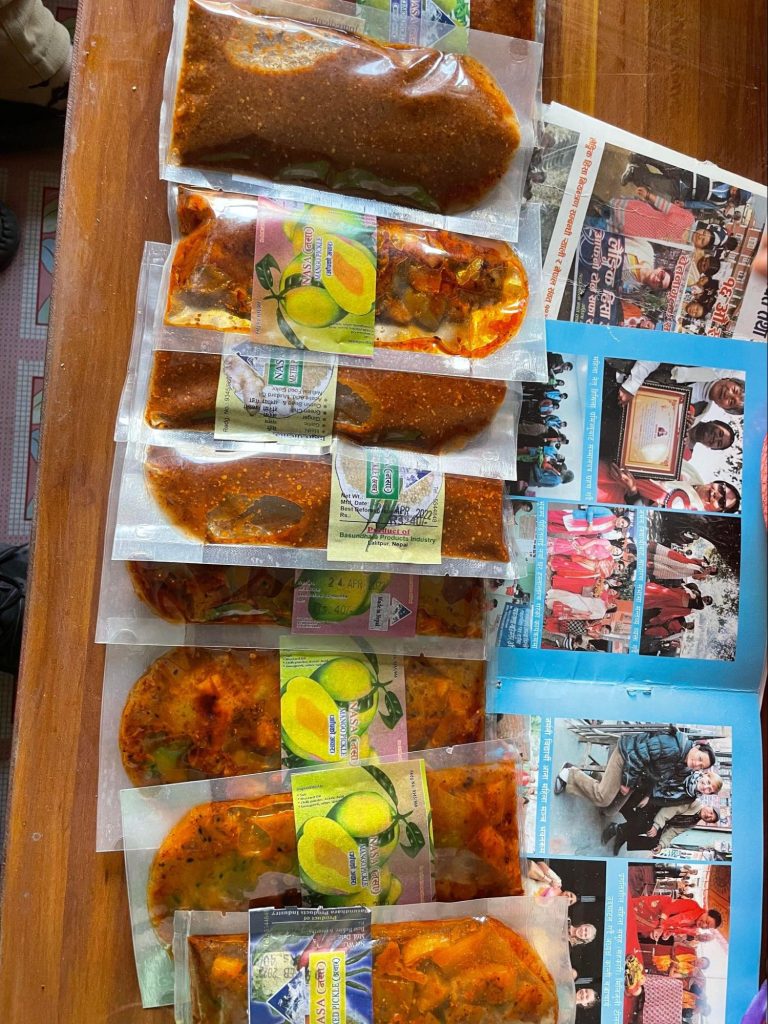
Much of this work has been led by DLRC President Ms. Kanti Bajracharya. She became engaged in Didi Bahini’s work after participating in a political empowerment training, where she learned about models of community development for women. She helped to found the local Women’s Forum with initially only seven women, each of whom began saving NPR 100 per month or less depending on income to develop community programs. In just 2 years, they expanded programming from one local ward to all nine wards, and grew membership to over 49 women, raising total NPR 2 lakh. However, they realized that to make these programs sustainable they would need to invest money in a reliable resource – and what better investment than the entrepreneurial spirit of local women. The group began giving small business loans to community women, with their first ever creditor being Ms. Mandira Devi Shrestha. She borrowed NPR 10k to buy chickens, and was able to quickly expand her business into a sustainable livelihood. The second loan was given to Ms. Indira Kumari to open a small Newari restaurant. Both women are now Women’s Forum members with successful businesses, and through becoming economically empowered, Ms. Kumari has even been motivated to run for local government office.
At the time of founding, no Women’s Forum members had political influence. They had no land to host programs on, and would often use local public spaces or government office gardens, however this was uncomfortable and did not provide privacy to conduct sensitive trainings for women. Working jointly with the government, the Women’s Forum leaders submitted a successful proposal to receive their own land where they could host programs sustainably. As positive momentum grew around their work and others in the government took notice, former Minister of Land Ms. Hisila Yami and the government Development Office supported them with NPR 6 lakh to construct a community center on the land. Local women were heavily involved in the construction, and today only women perform maintenance for plumbing or other issues on the DLRC building.
The Women’s Forum leaders have been heavily involved in shaping local policy in ways that support women. At the time of founding, there were no roads in Goldhunga. The lack of infrastructure was very detrimental to the local economy and families, causing them to take long and difficult journeys away from home regularly to earn money. The Forum was able to campaign successfully for the government to recognize people living in the area and eventually support the construction of roads. They were also successful in lobbying the government for a shared emergency fund to support the community in crises.
DLRC leaders are now facing several challenges, including concerns about possible corruption when the upcoming change in leadership between the current President takes place, since she is approaching her term limit. There are also many competing demands on the time of the Women’s Forum members, so there is a need for members who can take individual ownership of programs and act as a chairperson in order for them to be more consistent and successful. All members including the President are still volunteers and unable to take salaries, which also presents a challenge for sustainability.
In the future, the Goldhunga DLRC hopes to develop expanded programming for senior citizens in the community who are coping with isolation, depression, and other issues. There are also plans to expand the provision of study loans to students hoping to attend college in the country and abroad, particularly those studying in vocations like medicine that can help strengthen the community in the future.
Sanga DLRC
By Saru Duckworth, Fulbright Scholar
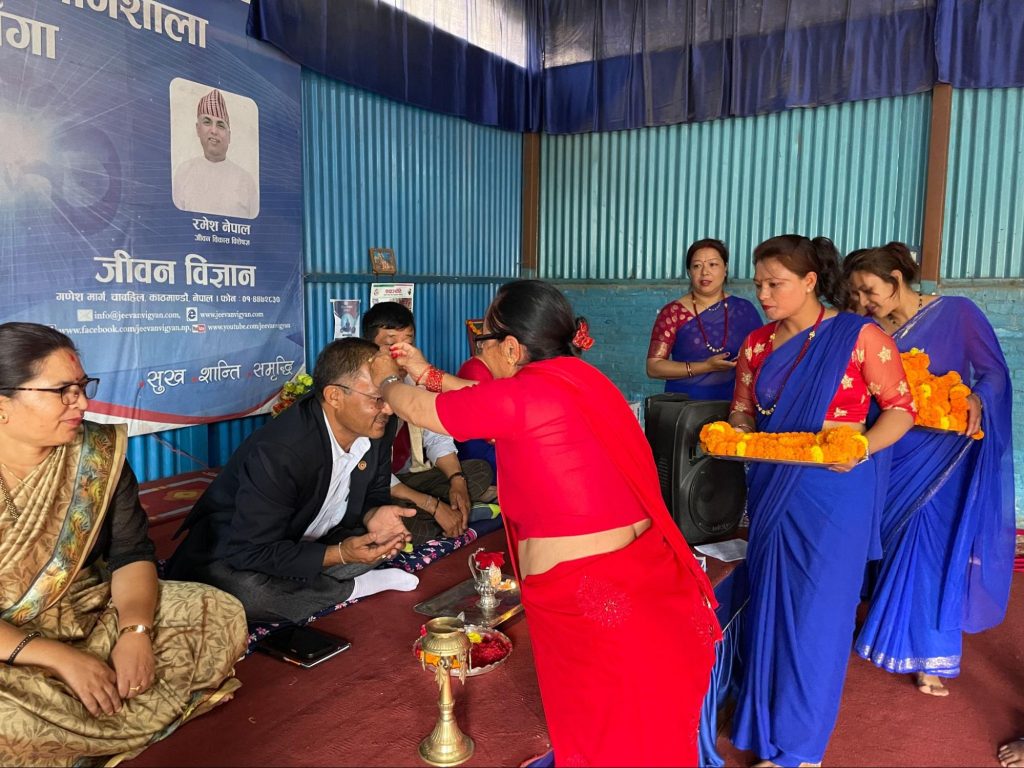
On June 7, 2022, DidiBahini’s Sanga Development Learning Center (DLRC) and Women’s Forum members came together to welcome the newly elected officials of Banepa Municipality. As a pillar of support, the Sanga Women’s Forum and DLRC have provided critical mutual aid to the community in close collaboration with local government for over 10 years. Gathering in the community yoga building, jointly constructed thanks to a local government grant, the group welcomed members including the new Municipality Chairperson Shanti Ratna Shakya, Deputy Chairperson Bimala Sapkota Dahal, and other representatives.
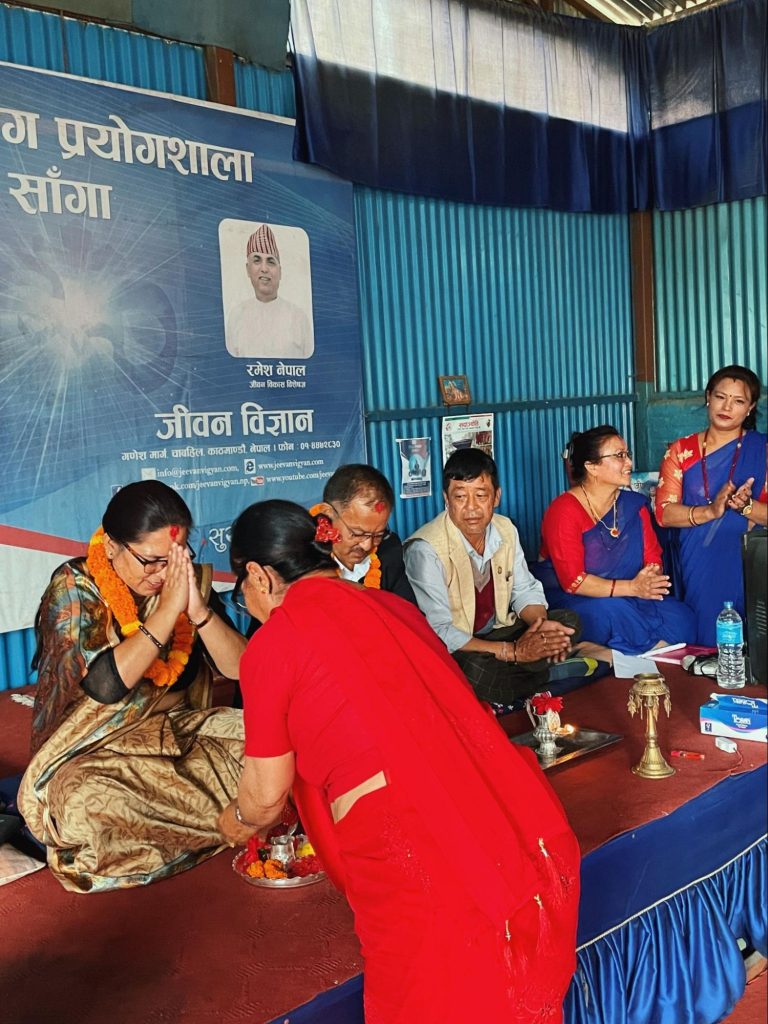
Following a welcome puja ceremony and distribution of gifts made by the children and staff of the DLRC, speeches were delivered by political officials, Women’s Forum leaders, and DidiBahini staff. Mr. Shanti Ratna Shakya delivered remarks on the important work of the Sanga Women’s Forum and the need to free up women’s time spent on unpaid care work to enable them to turn towards productive livelihood activities.
Ms. Bimala Sapkota Dahal echoed this message with a complementary speech reflecting on significant challenges for women and girls posed by the COVID-19 pandemic and outlined necessary steps to accelerate progress on gender equality agendas.
The Sanga DLRC boasts a symbiotic relationship with the local community and government, and credits open collaboration for producing almost two decades of fruitful programs for the community, particularly women and girls. Thanks to a local grant from the Tulsi Meher UNESCO Club, the Women’s Forum is able to operate DLRC programs rent free on their current land, in exchange for the upkeep of the premises. The ceremony highlighted the importance of the Women’s Forum in the local community and the collective power of women advocating for political support for their issues and programs.
The event concluded with attendees sharing a homemade Newari meal of samay baji, reflecting the cultural traditions and hospitality of the community.