 Joint Programme on Rural Women’s Economic Empowerment (JP RWEE)
The Joint Programme on Rural Women’s Economic Empowerment (JP RWEE) is a global initiative dedicated to strengthening rural women’s livelihoods, rights, and resilience within the broader framework of sustainable development, Agenda 2030, and the Sustainable Development Goals (SDGs). Under this programme, DidiBahini has been actively working to build the capacities of both rights holders and duty bearers, ensuring that rural women are not only beneficiaries but active participants in shaping decisions that affect their lives. The project is being implemented over the period from July 2024 to December 2026.
At its core, the programme focuses on enhancing the leadership and participation of rural women farmers in both family and community-level decision-making processes. It also works to expand their engagement with financial institutions, banking systems, and referral mechanisms. Recognizing that meaningful change requires collective effort, the project engages family members—including men and boys—as well as local faith and political leaders to improve relationships and shared decision-making, ultimately contributing to transformative change in the lives of rural women. In parallel, the programme supports all three tiers of government in developing and implementing gender-responsive policies and planning within the agriculture sector.
The project directly reaches 5,500 rural women farmers and 500 men, while indirectly benefiting 25,800 household members and 200 elected leaders, including government officials. Its implementation areas include key locations in Siraha and Saptari districts. In Siraha, the project operates in Laxmipur Patari Rural Municipality (Wards 1, 2, 4, and 5), Sakhuwanankarkatti Rural Municipality (Wards 2, 3, and 4), and Karjanha Municipality (Ward 5). In Saptari, it covers Chhinnamasta Rural Municipality (Wards 3 and 5) and Tilathi Koiladi Rural Municipality (Wards 3, 4, and 5).
As an ongoing initiative, the programme is currently implementing a wide range of interconnected activities across these project areas. It includes comprehensive assessments of women’s paid and unpaid work and related issues, alongside referral support that facilitates access to essential supplies and legal services. Counseling services are also being delivered, including through public service announcements, while psychosocial support is strengthened through the training and mobilization of a pool of counselors.
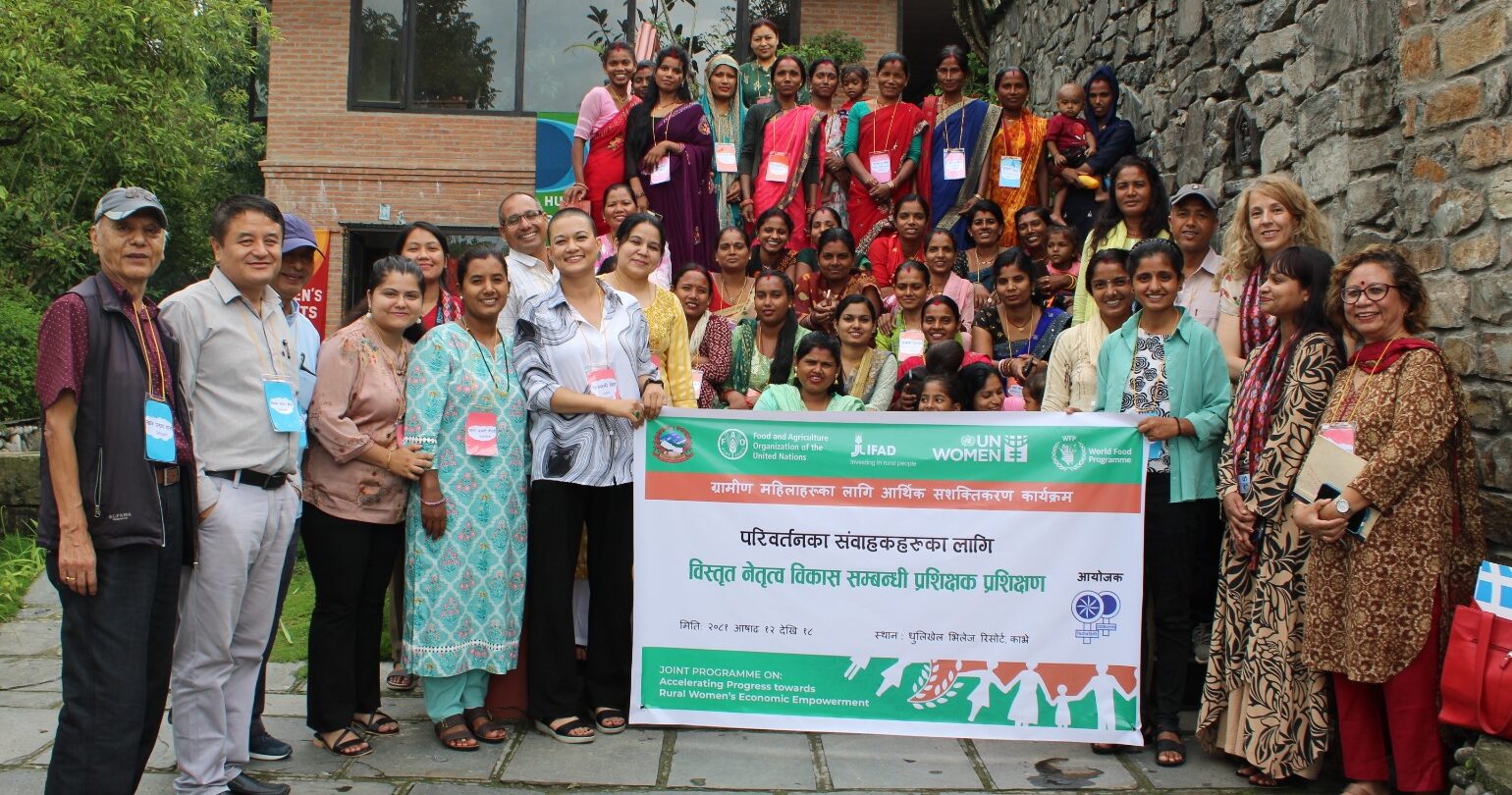
The programme places strong emphasis on leadership development by creating comprehensive training manuals, organizing master training programmes, and conducting six-week intensive interventions followed by regular engagement meetings. Community engagement remains a key pillar, with ongoing meetings involving local networks, men beneficiaries, and local vendors to encourage inclusive participation and dialogue at the grassroots level.
At the governance level, the project is actively engaging policymakers through consultation workshops and trainings at federal, provincial, and local levels, while also strengthening institutional capacity through continuous capacity-building initiatives. Policy dialogue and accountability mechanisms are being promoted through structured dialogues aimed at implementing gender-responsive policies and strategies, as well as through public hearing meetings at the district level.
In addition to these efforts, the programme is generating and sharing knowledge products, including video documentation, coffee-table books highlighting success stories, and concise policy dialogue papers. Coordination and strategic direction are maintained through organizational steering committee meetings conducted at federal, provincial, and local levels.
Through these comprehensive and ongoing efforts, the JP RWEE programme is working to create an enabling environment where rural women can exercise their rights, strengthen their economic empowerment, and actively contribute to inclusive and sustainable development.