Samaan Aawaaj Project “Equal Voices” Strengthening Women’s Rights & Inclusive Governance
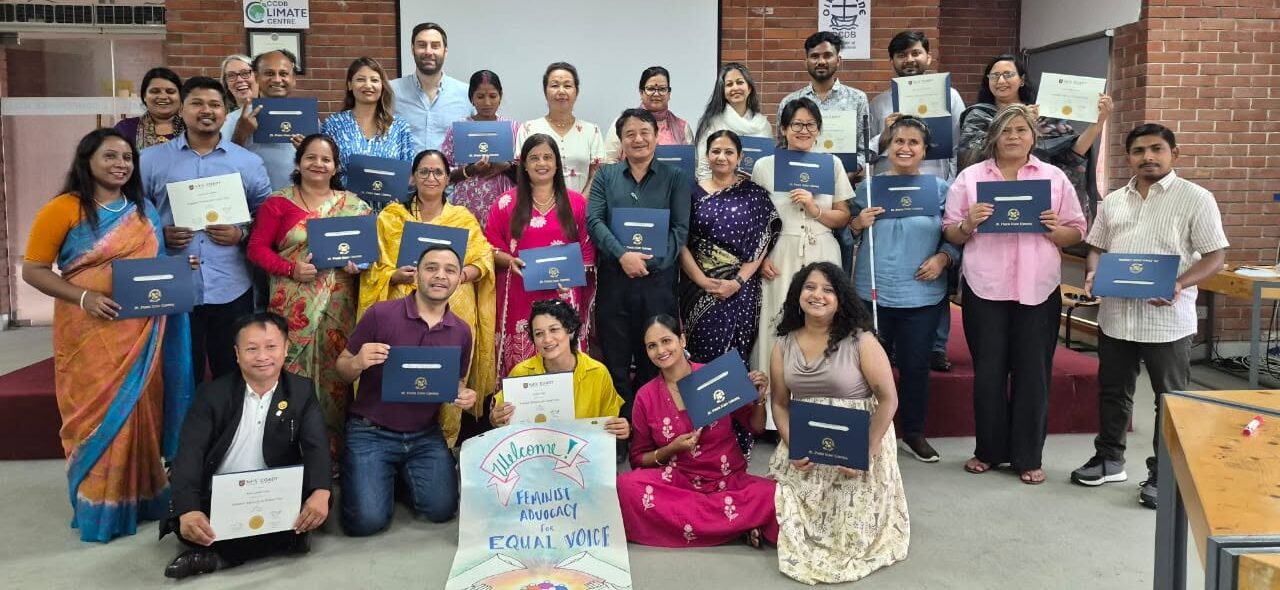 The Samaan Aawaaj Project, meaning “Equal Voices,” is an initiative designed to strengthen women’s rights and promote inclusive governance by creating more democratic, participatory, and accountable spaces for marginalized communities. The project responds to Global Affairs Canada’s Indo-Pacific Strategy (2024–2028), with a strong focus on strengthening civil society and expanding democratic spaces across the region.
Implemented by the Coady Institute in partnership with organizations in Nepal and Bangladesh The Story Kitchen (TSK) and Didi Bahini (DB) in Nepal, and the Christian Commission for Development in Bangladesh (CCDB) the project works across six districts in Nepal and 14 Union Councils in Dinajpur, Bangladesh. It specifically focuses on Dalit, Indigenous, religious minority, LGBTQI+, and other marginalized women, while also reaching approximately 10,800 indirect beneficiaries, including community members and local government representatives.
At its core, the project promotes inclusive local governance, women’s leadership, and feminist, citizen-led accountability. It creates spaces for dialogue, learning, solidarity, and cross-country knowledge exchange within the Indo-Pacific region. Through the use of a Feminist Monitoring, Evaluation, and Learning (FMEL) approach, the project ensures that learning and adaptation remain central to its implementation.
The Samaan Aawaaj Project aims to increase women’s meaningful participation in local government, decision-making processes, and democratic systems. It works to enhance transparency and accountability in gender-responsive public planning and service delivery, while strengthening solidarity networks among marginalized women leaders across Nepal, Bangladesh, and the wider Indo-Pacific region. By addressing power imbalances through transformative and evidence-based advocacy, the project fosters inclusive and sustainable governance grounded in feminist leadership and citizen-led accountability. It also promotes cross-border learning to reinforce democratic spaces and build resilience within civil society.
The project engages a wide range of stakeholders. These include approximately 335 local government duty bearers, such as elected representatives, staff, and chairpersons; women right-holders including grassroots, Dalit, Indigenous, and religious minority women; civil society organizations (CSOs) and women’s rights organizations (WROs); as well as journalists, both formal and informal, including citizen journalists. It also works closely with youth groups, religious leaders, political parties, and community groups to ensure broader social engagement and intergenerational dialogue.
To achieve its goals, the project implements a range of interconnected activities. It provides inclusive governance training to local government representatives, focusing on transparency, accountability, and gender-responsive budgeting, while supporting the integration of gender equality and social inclusion into local policies and plans. It promotes citizen-led accountability and feminist advocacy through courses, learning exchanges, adaptation of accountability tools such as community scorecards, and strategic advocacy planning. The project also strengthens media engagement by training journalists and citizen journalists in investigative methods and gender-sensitive reporting.
Dialogue remains a central pillar of the initiative. The project facilitates conversations between rights holders and local governments, engages religious leaders, and organizes intergenerational dialogues with political parties to foster understanding and collaboration. These efforts are complemented by regional learning opportunities that connect participants across the Indo-Pacific, encouraging knowledge sharing and solidarity.
Through these combined efforts, the Samaan Aawaaj Project contributes to increased women’s participation in local governance, improved capacity of local governments to deliver inclusive and gender-responsive services, and strengthened civil society and women’s rights organizations. It also helps build greater community awareness and support for women’s leadership, enhances transparency and accountability in governance, and promotes lasting change in patriarchal attitudes and governance practices. Ultimately, the project envisions a more inclusive, equitable, and participatory society where all voices especially those of marginalized women are heard and valued.