

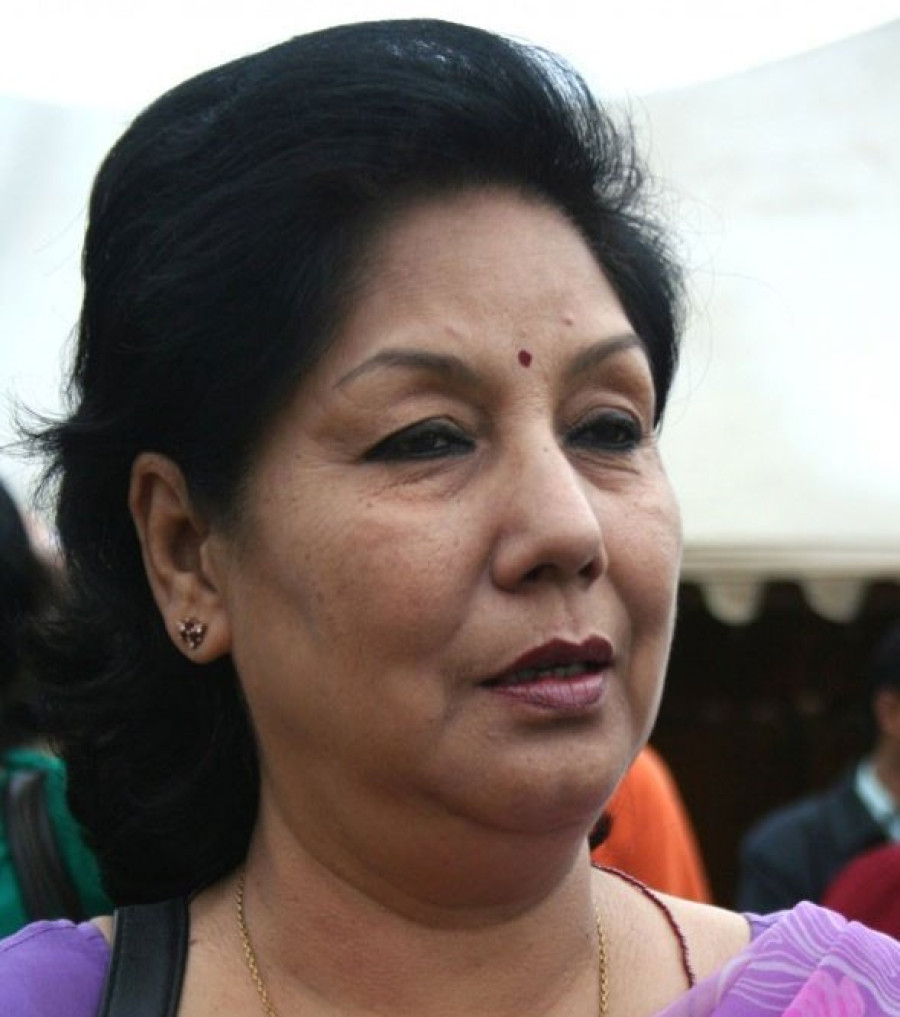
Pratibha Rana
Although she became actively involved in politics only after 1990 (2046 BS), Pratibha Rana has remained a frequently discussed figure in Nepali politics. Before entering politics, she was primarily known as the spouse of former Prime Minister Lokendra Bahadur Chand. When leaders with a Panchayat background formed the Rastriya Prajatantra Party in 1990 (2047 BS), Chand himself brought her into the newly established party.
Since then, she has continued her political journey without interruption. After joining the party, she went on to serve as a Member of Parliament and also held ministerial positions. However, she has often expressed dissatisfaction that she was not consistently given senior leadership roles within the party. She has stated that on several occasions she was excluded from key positions due to being a woman. At one point, when her name was proposed for the post of General Secretary, it was reportedly opposed on the grounds that both the party president (Pashupati Shamsher Rana) and the General Secretary should not be from the same family background. This, she felt, resulted in her being sidelined within the party leadership structure.
Despite these grievances, she has consistently contributed to strengthening and expanding the party and has never stepped back from organizational responsibilities.
challenges faced by women in elections:
Patriarchal attitudes remain one of the biggest barriers for women in politics, as society and political parties often hesitate to accept women in leadership roles. She also highlights election-related violence, pressure, influence of power, and limited access from local to national levels as major challenges for women candidates.
Although elections are a key part of democracy, she believes they are still not easy for women to participate in. A major issue is the lack of trust in women’s leadership within parties and society, which becomes the first hurdle for many women. She also notes that elections have become expensive, and women often do not receive enough financial or institutional support from the government or political parties. Limited access to political networks and resources further adds to the difficulty. In addition, political parties and leaders are often not sensitive enough to these issues, and many women also lack strong family support when they decide to enter electoral politics.Top of FormBottom of Form
Areas to focus on for increasing women’s participation in politics:
In a multiparty political system, political parties play a central role, and therefore a women friendly environment must first be developed within parties themselves. According to her, party statutes should include a mandatory provision ensuring at least 33 percent representation of women.
Women’s meaningful participation should be ensured at all levels of party structure from wards and local committees to national policy-making and law-making bodies. Party constitutions, policies, and regulations should be designed in a way that is inclusive of women’s needs and perspectives. There is a significant need for designated electoral constituencies for women to strengthen their representation. Women’s participation is equally important in key institutions such as policy-making bodies, law revision committees, constitutional bodies, and the National Planning Commission. If women are ensured leadership roles in constitutional appointments and key positions in local elections, it would significantly support their advancement in politics.
Advice for young women in politics:
Continuity and commitment are essential in politics. Political leaders should not only guide themselves but also help guide society and the nation. Since politics is the key policy framework of all sectors, it must be understood in a serious and meaningful way. The absence of women in the mainstream power structure has contributed to the marginalization of both women and the state. Young women politicians should be encouraged move forward with strong dedication to politics. Even in cases of setbacks or defeat, they should not lose hope, but take such experiences as learning opportunities and continue moving forward. Rather than focusing on positions or titles, she encourages women to work as agents of social and public transformation.
Role of women’s wings in increasing women’s political participation:
Women’s wings within political parties serve as an important entry point into party politics. These organizations play a key role in training, mobilizing, and increasing women’s participation in politics, as well as advocating for their representation. Women’s wings also contribute by providing training, raising awareness, and developing the skills and confidence of women members. Even when parties do not provide sufficient support, these wings often continue such efforts independently, playing a crucial role in strengthening women’s political engagement.
Key qualities of women political leaders:
She emphasizes that women in politics should have strong leadership skills, the ability to guide society, discipline, and the capacity to listen deeply to others. They should develop a mindset of working closely with communities for the benefit of society and the nation.
Along with self-confidence, she highlights the importance of accepting others’ leadership as well. She believes women should also practice supporting and recognizing female leadership. Other essential qualities include the ability to collaborate, make independent decisions, and have broad knowledge of different issues.
Recent Posts
Feminist Leadership Development Training
Feminist Advocacy Training